
DaDesktop for Participants - How to Get Started
Objective
This guide is for participants (students) looking to join a course run on DaDesktop in Hong Kong.
Overview of DaDesktop
DaDesktop is a cloud-based platform built specifically for IT training. It caters to both trainers and learners, employing the innovative DaDesktop® technology to deliver virtual desktops. During sessions, every participant gets their own complete online desktop, allowing them to complete exercises while the instructor supervises.
Its three main parts are:
- Management Console – a web interface for managing the system, like starting and stopping cloud desktops.
- Training Room – a collaborative area with screen sharing, audio, chat, session recording, and more.
-
Remote Desktop – a dedicated virtual machine (Windows or Linux) for each user.
Requirements
If you're joining from your office or home in Hong Kong, you'll need:
- A computer (desktop or laptop) with a stable internet connection (at least 10 Mbit/s download, 1 Mbit/s upload). Windows, Mac, or Linux systems are all fine.
- Chrome or Firefox browser
- A decent microphone or headset (using a phone is possible but not ideal)
-
A quiet environment, without distractions or background noise – a coffee shop won't cut it.
Recommended:
- Webcam
- A second monitor: keep one screen for following the trainer and the other for working on your DaDesktop Virtual Machine during labs.
- Turn off any VPN before the course
- If feasible, disable any security software that might interfere with your network connection
- Prefer a wired Ethernet connection; if you're on Wi-Fi, run a speed test beforehand (e.g., speedtest.net) to check your connection.
You might like to test joining your course and explore the DaDesktop virtual classroom ahead of time. Just keep in mind that before the official start date, you can only access the Desktop for 15 minutes per day.
Course Access
Outside of scheduled course days, access is limited to a 15-minute window.
On course days, you can connect all day. In the past, access was only granted about an hour before the session.
Keep Desktop after Course finishes
A standout benefit of DaDesktop is that participants can keep using their virtual machine after the course ends.
Check the link above for complete instructions on how to do this.
Joining a Course
Open the link provided by the coordinator (for instance, dd4t.dadesktop.com/da/join/xxxxx).

Image 01
If you're a first time user, fill in your details under "Account" and hit “Sign Up”. You can register using the form or log in with your Google or LinkedIn account.
If you already have an account, just log in.
That brings you to the Management Console for your course.

Image 02
Using the Management Console
Select the "TRAINING ROOM" tab.
Then click the "Join Training Room" button.

Image 03
The Virtual Training Room opens in a new browser window. A pop-up will ask for permission to copy items to the clipboard. Choose "Allow".

Image 04
Navigating the Training Room as a Participant
The Training Room appears with a tab at the top, giving you easy links back to your course.

Image 05
Controls available at bottom of the screen
- You can pop the screen out onto another monitor if needed; you can also maximize the browser window to full screen.
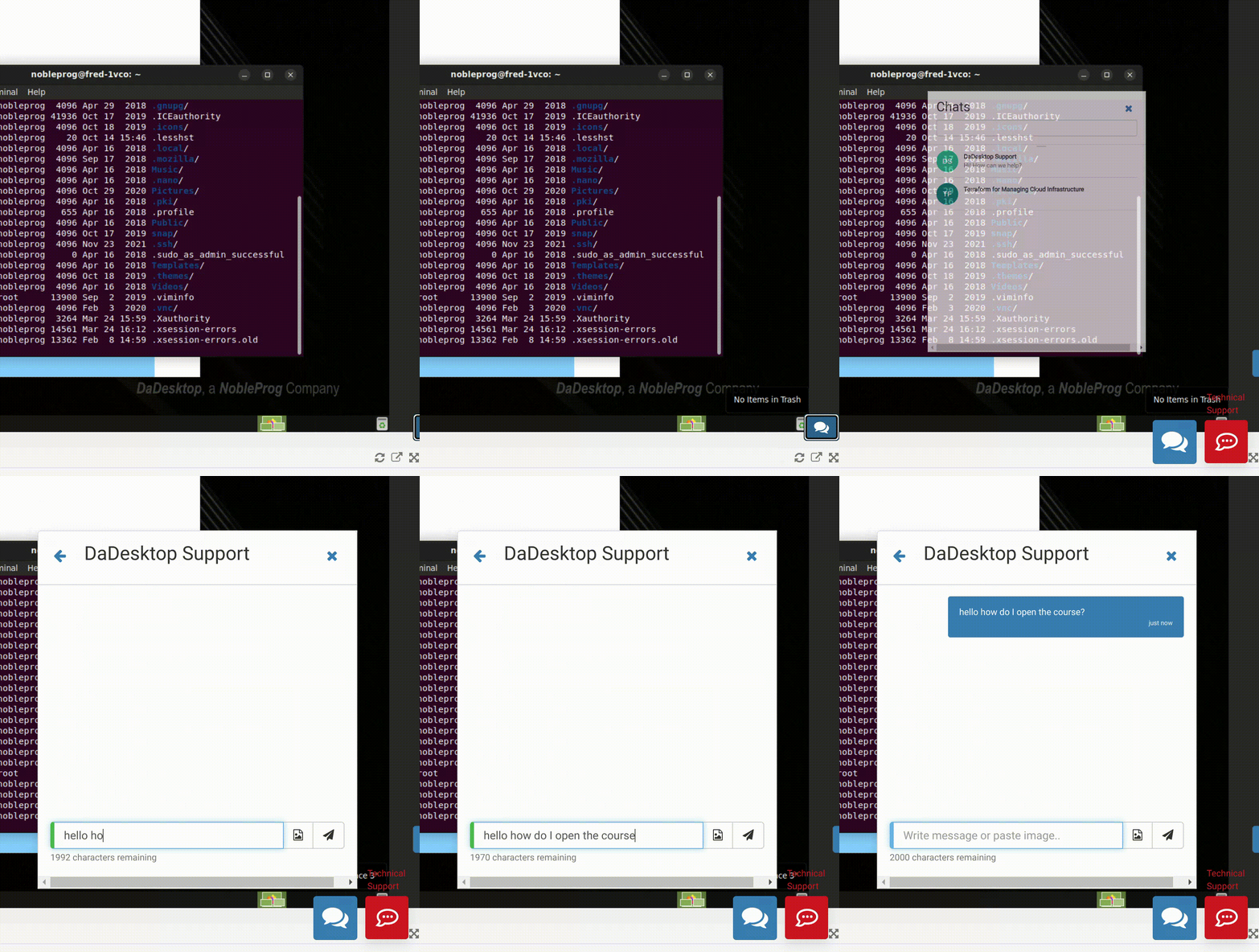
- At the bottom right, a small blue toggle gives you access to DaDesktop support chat when you need it.
Using the new Clipboard function
 To transfer text—like web links, commands, or other snippets—from your own machine to the Virtual Machine, you use the Clipboard.
When you connect to your Online Course or Stand-alone Desktop, a pop-up like the one here will show up. Click ‘Allow’. Note that images currently can’t be copied to the clipboard with DaDesktop.
Image 06
 Clicking the small clipboard icon in the address bar lets you adjust the clipboard settings for this site.
Usage
- On Windows and Linux VMs, copy and paste normally with Ctrl-C / Ctrl-V.
- On a Mac host, copy as usual, then press Shift + Ctrl + V or middle-click to paste.
Image 07
If you need extra help with this feature, feel free to reach out to us.
Original Clipboard (for browsers that don’t support the new Clipboard, like IE, or as a fallback)
- To copy text from your machine to the DaDesktop virtual machine, type or paste into the clipboard area at the bottom left.
-
Inside the virtual machine, middle-click (or press the mouse wheel) to paste the clipboard content onto the desktop. This works anywhere you can enter text in DaDesktop, assuming you're on the standard Linux VM.
For Mac users: use Command-C (⌘-C) to copy and Command-V (⌘-V) to paste. After pasting into the dd4t clipboard, inside dd4t the shortcuts become Control-X (cut), Control-C (copy), Control-V (paste). - On a Windows VM, right-click to paste from the clipboard.
To adjust the clipboard area’s size, click the green and white arrow icon at the bottom left of the screen.
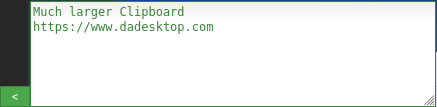


Image 08
Using the mouse in a multi-user scenario
When more than one person connects to the same desktop, a label showing the current mouse controller’s username follows the pointer. This is particularly handy for multi-user environments and training exercises where control of the mouse changes hands.

Image 09
If several users are connected, their usernames appear at the bottom center of the screen.

Image 10
You can toggle this feature on and off by clicking the green ‘Info’ button at the bottom of the screen.